
- A Few Words About the Book
- Martyrdom is not death; it is life.
- The Key to Paradise
- The Book of Monotheism
- The Theory of the Supreme Council of the Cultural Revolution: The Fourth Branch of Government
- The "Resistance Economy Headquarters" Theory: The Fifth Branch of Power
- Strong State Theory
- The Period of Transition to an Islamic State
- Divine Decree in Islam
- Legislative and Supervisory Assembly in Islam
- Military Force in Islam
- Student organizational activity
- Theory and Theorizing
Plan to Upgrade and Enhance the Efficiency of the Organizational Structure of the Islamic Republic

In the name of Allah, the Merciful
Plan to Upgrade and Enhance the Efficiency of the Organizational Structure of the Islamic Republic
Introduction:
An examination of the current situation serves better than any introduction or preamble. A wide range of directives and expectations issued by Imam Khomeini and Imam Khamenei to various state institutions remain unfulfilled. Occasionally—whether to mark the anniversary of those mandates, the appointment of new officials, or the conclusion of elections for the administration, the Assembly of Experts, or the Islamic Consultative Assembly—some of these unmet demands are briefly recalled, only to be set aside once more.
Amidst this, there are demands that continue to cause us harm due to past neglect; demands that might only be addressed at a very heavy cost; and demands that, while no longer a priority, could still serve to resolve certain problems.
The Constitution grants no authority to enforce the decrees of the Supreme Leader regarding the conduct of state officials. On the other hand,
Institutions such as the Central Bank or the Plan and Budget Organization—which in most countries, especially developed ones, operate under the authority of the state and do not alter their course with changes in government—are not under the control of the Supreme Leader either. Furthermore, the grand ideals and objectives of the Islamic Revolution cannot be realized through the conventional tripartite structures found elsewhere in the world—structures that, today, fail to adequately address even their own routine needs and challenges. It is akin to a team of cyclists attempting to win Olympic medals while riding children's tricycles.
Imam Khomeini and Imam Khamenei fully grasped and understood this point. This is evident in Imam Khomeini’s statement—made during a meeting with members of the Assembly of Experts for the Constitution—that the powers enshrined in the Constitution did not amount to even one-tenth of the authority of the *Velayat-e Faqih* (Guardianship of the Islamic Jurist), as well as in his famous letter to the Friday prayer leader of the time, in which he declared that the authority of the *Faqih* is identical to the authority of the Messenger of God. In practice, too, they complemented the existing army and gendarmerie by establishing the Islamic Revolutionary Guard Corps (IRGC), the Revolutionary Committees, and the Basij (Mobilization of the Oppressed). Furthermore, by establishing institutions such as the Imam Khomeini Relief Committee, the Construction Jihad, the Execution of Imam Khomeini's Order (EIKO), the Headquarters for Prayer Promotion, the Headquarters for Enjoining Good and Forbidding Evil, the Islamic Azad University, the Supreme Council of the Cultural Revolution, and the Expediency Discernment Council, they addressed gaps in the Constitution and enhanced established and existing structures.
Imam Khamenei, too—employing special measures yet following the same general approach—established the Supreme Council of Cyberspace, the Resistance Economy Headquarters, the Center for Mosque Affairs, the Khums Headquarters, the Zakat Headquarters, and various other organizations.
Issues and History:
Quite apart from evaluating the performance of these entities, their establishment was undoubtedly driven by genuine need and necessity. Even assuming they have failed to meet all expectations or fully discharge their duties, the solution is not to eliminate or dissolve them; rather—as with any other institution, whether the government, parliament, or judiciary in Iran or anywhere else in the world—we should focus on resolving problems, refining laws, and improving processes.
Amidst this, one issue stands out starkly—the very same issue mentioned at the beginning of this article: the enforceability of the directives issued by the *Vali-ye Faqih* (Supreme Leader). Yet, both friend and foe alike hold the Supreme Leader personally accountable for the state of the Islamic Republic and for the system's failures and inefficiencies. In other words, the burden of responsibility rests upon an individual whose formal powers are not commensurate with his duties and obligations. The Supreme Leader is expected to answer for the entire country, even though—as Imam Khamenei stated during Nowruz 1400—under the Constitution, the vast majority of the country's executive authority (over 95%) lies with the President.
Pay attention to these sentences and phrases in the decrees and statements of Imam Khamenei:
In the decree appointing the members of the fourth term, Imam Khamenei states the following regarding the Expediency Discernment Council:
"The Expediency Discernment Council, which was initially established through the initiative of the late Imam..." رضواناللهعلیه It came into being—and was subsequently enshrined in this precious national document through the foresight of those who reviewed the Constitution—as one of the most auspicious legal institutions of the Islamic Republic. It is an enduring legacy, brought into existence by the wisdom and comprehensive vision of our great Leader at a time when the country’s need for it had become evident, thereby elevating the nation's high-level governance to the requisite standard.
In accordance with the directives of the Constitution, this Assembly acts as an efficient and trusted advisory body to the Leader regarding the determination of the system's general policies, the resolution of major national issues, and the handling of important matters referred to it by the Leader; furthermore, by determining the "expediency" in cases of conflict between parliamentary legislation and the views of the Guardian Council, it effectively resolves one of the system's critical dilemmas. Thus, considering the totality of its constitutionally mandated duties, this Assembly occupies the position of a supreme advisory body to the Leader within the Islamic Republic system. (March 17, 1997)
Imam Khamenei, while appointing Hojjatoleslam Hashemi Rafsanjani and in part of the decree appointing members of the Sixth Term The Expediency Discernment Council states:
"I deem it necessary to urge that esteemed assembly to make the utmost use of expert opinions—thereby reinforcing this vital foundation—and to ensure the active participation and well-reasoned deliberations of its members. The compilation of the documents that underpin and inform the assembly’s resolutions will undoubtedly constitute a valuable scholarly resource, benefiting seekers of knowledge and researchers alike..."
Further on in this same appointment decree, to place greater emphasis on her expectations and the directive issued, she has written as follows:
"I beseech God Almighty to grant these esteemed gentlemen success in discharging this important responsibility they have undertaken, and in heeding the recommendations set forth in the text and the attachment to this directive." — February 27, 2007
In the decree reappointing Hojjatoleslam Hashemi Rafsanjani—and as part of the appointment of members to the seventh term of the Expediency Discernment Council—Imam Khamenei states: Seventh Term The Expediency Discernment Council states:
"While emphasizing the full implementation of the recommendations issued during the previous term, additional points will be communicated in an attachment to this decree..."
In conclusion, I urge the esteemed members of this term to uphold propriety, rectitude, precision, fairness, and comprehensiveness; to observe the interests of the System in the fullest sense of the term; and to participate actively in the sessions of the Assembly and its relevant commissions. I pray for their success in discharging the important responsibilities they have assumed for this new term. — March 14, 2012
Imam Khamenei, following the passing of Hashemi Rafsanjani, in a portion of the decree appointing the members and the head of the eighth term of the Expediency Discernment Council... Eighth Term The Expediency Discernment Council, chaired by...
Hashemi Shahroudi states:
Now, with the commencement of a new term for this institution, and in light of valuable existing experience, changes to its structure and content appear necessary—primarily consisting of the following:
- Organizing the set of general policies and reviewing their titles, as well as the process of their formulation and regulation.
- Organizing the oversight of policy implementation.
- The mechanism required to evaluate the efficiency and effectiveness of policies.
- Establishing complete coherence within the organizational and managerial structure, and focusing programs based on the approved regulations.
- Streamlining the organizational structure and eliminating redundant and unnecessary units.
"Beyond these, other corrective changes will also prove necessary in the course of the work—thanks to the meticulous attention of those involved and the flexibility of the organization—and will be implemented, God willing." (August 14, 2017)
Following the passing of the late Ayatollah Hashemi Shahroudi, and in a portion of the decree appointing Ayatollah Amoli Larijani as the head of the Expediency Discernment Council, Imam Khamenei states:
"As previously stated in the mandate for the new term, the Assembly is also charged during this period with the vital and fundamental responsibility of transforming the structure and content of that influential and important institution." (December 30, 2018)
امام خامنه ای در بخشی از حکم انتصاب اعضای دوره نهم In a section of the decree appointing the members of the ninth term of the Expediency Discernment Council, and with the aim of calling for action, Imam Khamenei—for the umpteenth time—reminds the Council of its unfulfilled mandates, stating:
"Demands raised in the statement at the beginning of the previous term must be reiterated now, as they have not been fully met. These include: organizing the oversight of policy implementation and proposing a mechanism to evaluate the efficiency and effectiveness of policies." — September 20, 2022
These are merely a single instance among a multitude of efforts to pursue demands spanning forty years—demands consistently reflected in the rulings, decrees, statements, and stances of the leaders of the Islamic Ummah; to quote the poet, "From this brief summary, read the full story yourself."
Regarding the system's major institutions—such as the government, the Islamic Consultative Assembly, the Judiciary, the seminaries, the Supreme Council of Cyberspace, the Supreme Council of the Cultural Revolution, and the Resistance Economy Headquarters—as well as key topics like "astronomical salaries," the JCPOA, stances on the 2009 "Sedition" (post-election unrest), relations with the "Great Satan" (the US), and sanctions, one can identify dozens of frequently raised issues and unfulfilled demands; had these been properly addressed, the country’s cultural, economic, and social situation would certainly not be what it is today.
The question now arises: through what mechanism can the Supreme Leader’s demands of these institutions be pursued and reports requested? This is particularly pertinent given that these very institutions are often the ones responsible for making demands of—and holding accountable—the entities under their own supervision.
Proposed solution:
It seems that if, like the meeting of the heads of the three branches of government, in addition to all existing and customary capacities, a coordination and official meeting is formed and its resolutions have the force of law; if a capacity is created based on the existing need and necessity, it can pursue and make serious resolutions regarding the demands of the Supreme Leader from the major systems of the system. Creation Islamic Revolution Coordination Headquarters One of the proposed mechanisms involves a body composed of the heads and secretaries of the system's major institutions. This headquarters derives its official status and identity from the leadership of the Supreme Jurist (Vali-ye Faqih) and the Commander-in-Chief; to streamline administrative operations, the position of secretary has also been established to present issues based on priority and ensure the precise follow-up of approved resolutions.
Similar domestic and foreign examples:
In the Republic of South Korea—where the President holds the highest office and serves as Commander-in-Chief—an "Audit and Inspection Board" operates under the direct authority of the President to oversee and ensure the accountability of other branches of the system, in accordance with Articles 97 through 100 of the Constitution.
In the Kingdom of Morocco—where the King selects the head and members of the government—he relies on the Council of the Throne for consultation, decision-making, the selection of the cabinet, and even the management and oversight of the government; this Council comprises certain state dignitaries and specific individuals, in accordance with Articles 21 and 24.
Even a country like Tunisia, under Article 69 of Chapter 6 of its constitution, has a governing council; other nations—including Sweden—also exhibit similar, albeit smaller-scale, examples of mechanisms designed to ensure oversight and accountability across various sectors.
Design and Path of Advocacy:
There are several strategies and paths worth considering, including:
1) Offering proposals based on a diagnostic perspective—for instance, in the speeches of Professor Ali Rezaeian (adopting a managerial approach), Professor Hassan Rahimpour-Azghadi (adopting a discourse-oriented approach), or Ayatollah Mirbagheri (also adopting a discourse-oriented approach).
Support from the Assembly of Experts
Support from scientific elites and university professors
Support from Seminary Professors
Support from the Student Basij and other student organizations
Support from influential voices in the online space
Turning into a public demand
And then, once the groundwork has been laid among both the elite and the general public for realizing the Supreme Leader's directive, the decree of the Guardian Jurist—God willing—will be issued for its establishment and operation. Islamic Revolution Coordination Headquarters It is issued.
Division of labor:
Coordination among the Assembly of Experts members was facilitated through Ayatollah Ka'bi and Ayatollah Farhani, and—in their case—through Hojjatoleslam Sheikh Saeed Dasmi.
Coordinating support from scientific elites and university professors through Dr. Mokhber, Dr. Haddad-Adel, Dr. Ketabi, and others.
Support from seminary professors, conveyed through Ayatollah Arafi.
Support from the Student Basij and other student organizations, facilitated by Hojjatoleslam Mohammad-Reza Toyserkani.
Support from influential online figures, including Hojjatoleslam Panahian, Raefipour, Hojjatoleslam Mandegari, and Hojjatoleslam Aali.
It became a widespread public demand in the media, coordinated by Vahid Jalili, the Fars and Tasnim news agencies, and newspapers such as Kayhan and Farhikhtegan.
The speech chapter of this plan is from the words of the Supreme Leader, who, in a meeting with Major General Baqeri, emam khamenei He said:
We have made progress in military affairs because we have a "General Staff of the Armed Forces." We must also have a "General Staff" for the affairs of the Islamic Revolution.
2) Providing private, non-media correspondence to the Leader of the Islamic Ummah to support his decision and create "General Staff of the Islamic Revolution"
3) Submission of a triple-urgency bill to the Islamic Consultative Assembly.
4) Submission of the Cabinet's bill to the Islamic Consultative Assembly.
5) Approval by the Assembly of Experts for the Leadership.
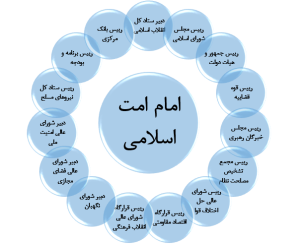
"General Staff of the Islamic Revolution"
Imam of the Islamic Ummah
Secretary of the Islamic Revolution General Staff and the heads of 14 national organizations.
1. Speaker of the Islamic Consultative Assembly
2. The President and the Cabinet
3. Head of the Judiciary
4. Chairman of the Assembly of Experts for the Leadership
5. Chairman of the Expediency Discernment Council
6. Chairman of the Supreme Council for the Resolution of Conflicts of Powers
7. Head of the Resistance Economy Headquarters
8. Head of the Supreme Council of the Cultural Revolution Headquarters
9. Secretary of the Guardian Council
10. Secretary of the Supreme Council of Cyberspace
11. Secretary of the Supreme National Security Council
12. Chief of Staff of the Armed Forces
13. Head of Planning and Budget
14. Governor of the Central Bank
"General Staff of the Islamic Revolution"
 Persian
 English